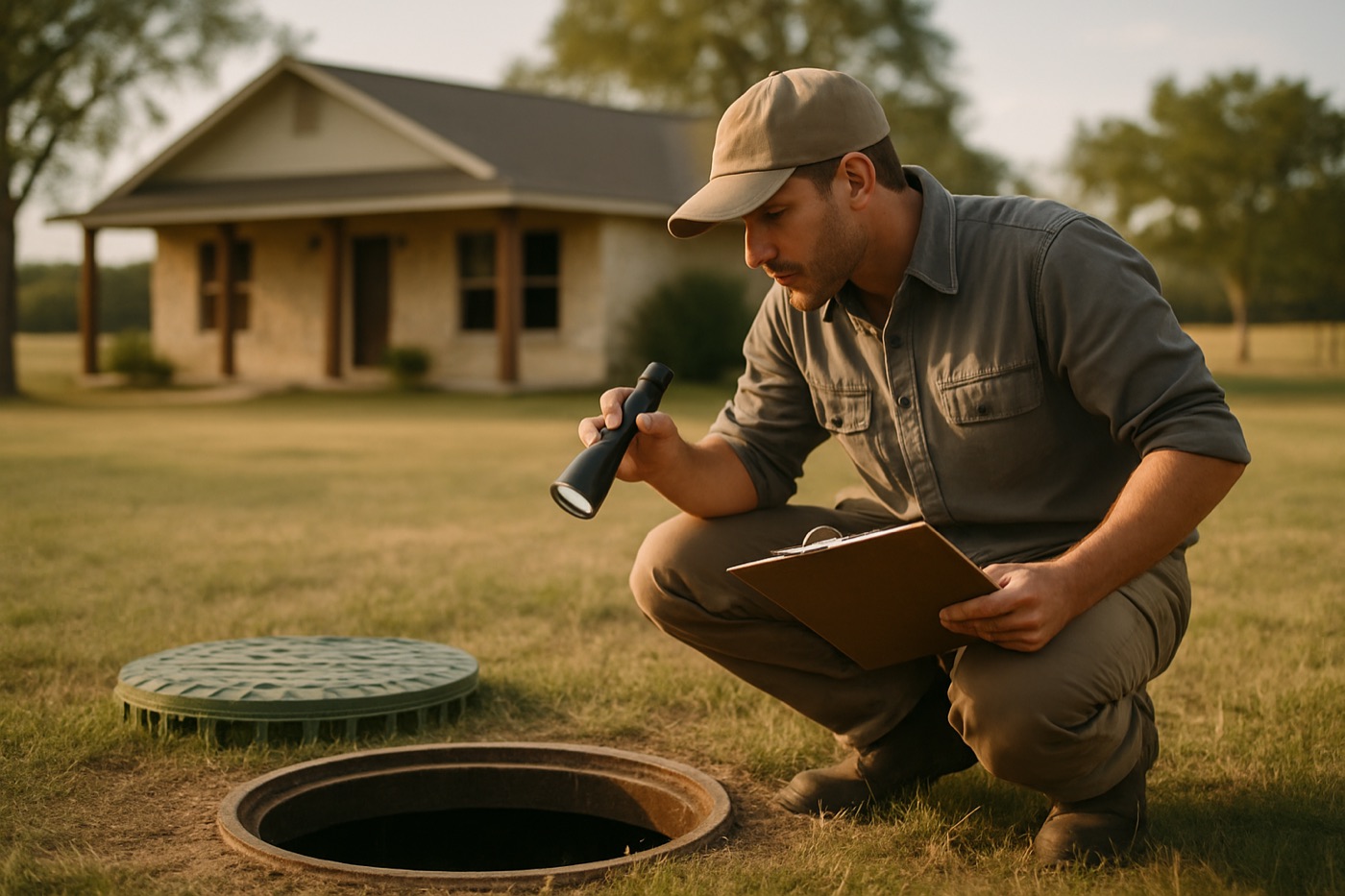
Why the general home inspection isn't enough
A standard home inspector runs water for a few minutes and looks for obvious backups. That catches a system that's already failed — it says nothing about one that's two years from failing. A real septic inspection opens the tank, pumps it, and looks at the parts that predict the future: baffle condition, tank cracks, sludge accumulation rate, drain-field uptake, and for aerobic systems, the compressor, sprayers, chlorinator, and the county maintenance record. With drain field replacements running well into five figures, the $550–$800 inspection is the cheapest due diligence in the transaction.
What we check
For a conventional system: tank size and material versus household size, water level before and after pumping (a tank that stays high isn't draining), baffle and lid condition, evidence of previous backups, and drain-field probing for saturation or surfacing effluent. For an aerobic system: everything above plus compressor output, spray head coverage, chlorine residual, alarm and float operation, and whether the maintenance contract and county filings are current — a lapsed contract is a negotiating point, and an unpermitted repair is a red flag.
Buying land or an older home around Kyle?
Two local wrinkles. First, older homesteads toward Uhland, Dale, and the county edges sometimes run systems that predate permitting — undersized tanks, cesspools, or "the pipe goes to the creek" arrangements that a lender or insurer may refuse outright. Second, Kyle's explosive growth means plenty of 15–25-year-old systems built for a couple are now serving a family of six; the system can be intact and still be wrong for the load. An inspection report puts numbers on both problems before they're your problems.
For sellers
A pre-listing inspection with a fresh pump-out and paperwork in order removes the single biggest source of rural-closing surprises, and buyers' agents around here know to ask. If the system needs a repair, doing it on your schedule beats a closing-week concession every time.
Common questions
What does a real-estate septic inspection cost in Kyle?
Typically $550–$800 in the Kyle–Buda area including the pump-out, which is the only way to properly examine the tank. Aerobic systems run toward the top of the range because there's more equipment to test.
Is a septic inspection required to sell a house in Texas?
Not by state law, but many lenders and buyers require one, and the seller's disclosure asks about septic condition. For aerobic systems, buyers should also verify the maintenance contract and county filings are current.
How long does a septic inspection take?
Usually 1.5 to 2.5 hours including the pump-out, plus locating and opening the tank. You'll get a written report with photos of the open tank, measured levels, and any defects.
The house has an aerobic system — what should I ask the seller for?
The maintenance contract, the last several inspection reports, the county permit and site drawing, and receipts for any pump or sprayer repairs. Gaps in the maintenance record are common and negotiable — unpermitted modifications are the bigger problem.
Get a fast quote
Tell us what's going on. A local septic pro will call you back — usually the same day, often within the hour.
Got it — you'll get a call back shortly. If this is an active overflow, stop running water in the meantime.