Why aerobic systems dominate around Kyle
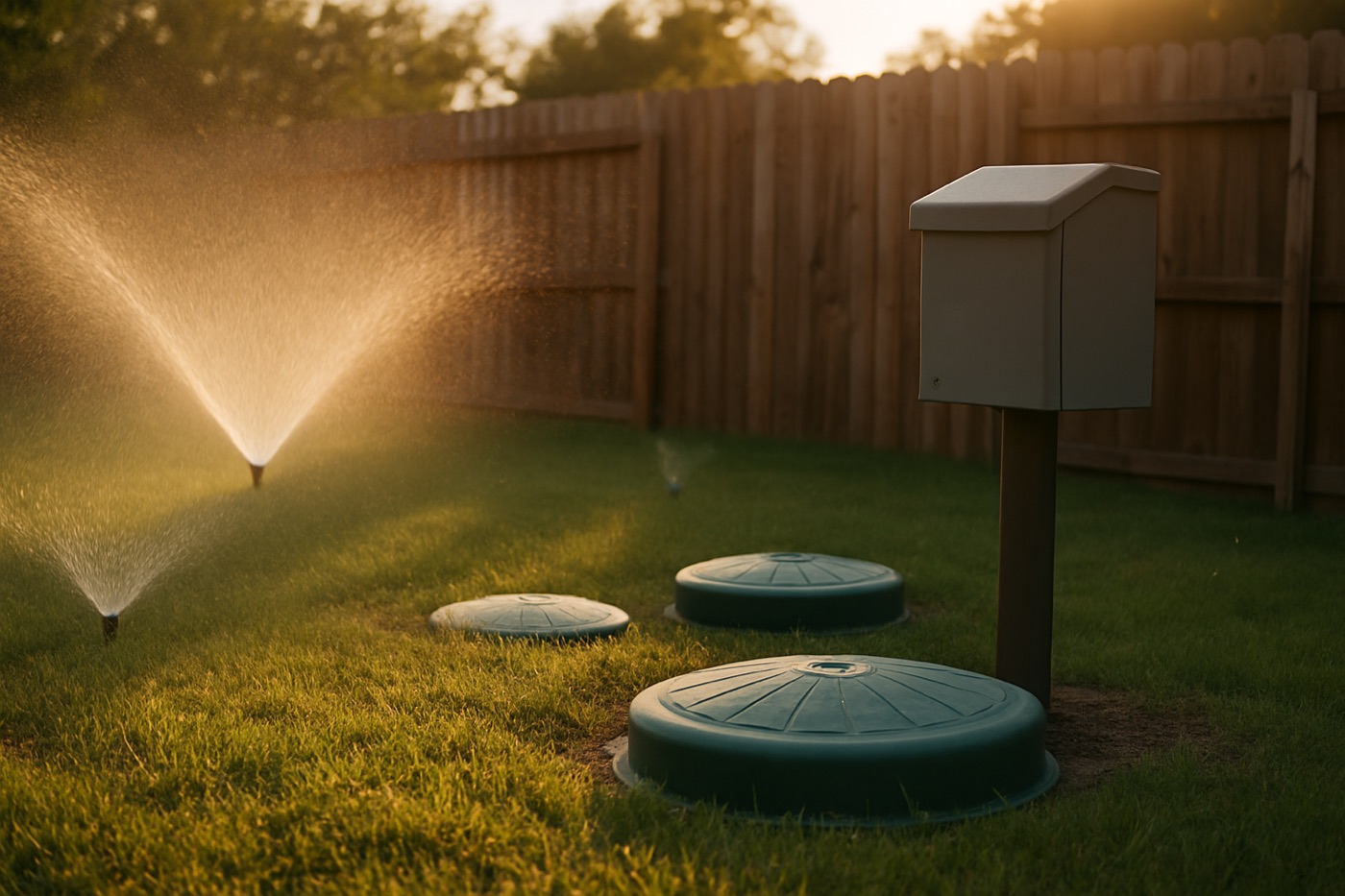
Much of eastern Hays County sits on slow-draining blackland clay where a conventional drain field would fail, so county permitting pushed new construction to aerobic treatment units (ATUs) with spray distribution. If your home was built in the last two decades in a Kyle-area subdivision on septic — or anywhere off FM 150, toward Uhland, Niederwald, or Dale — odds are you own one: a system with an air compressor, a pump tank, a chlorinator, spray heads in the yard, and a control panel with an alarm light you hope never comes on.
What Texas actually requires
Aerobic systems in Texas operate under TCEQ rules that require routine inspections — the standard schedule is every four months, three visits a year — covering the compressor, filters, chlorine supply and residual, sprayer operation, and alarm function, with results reported to the county. Hays County permits generally expect a current maintenance contract on file; when it lapses, you can hear about it, and a missing maintenance history is a classic snag when you sell the house.
What a maintenance contract covers
A typical Kyle-area contract runs $250–$400 per year and covers the three scheduled inspections, the county reporting, and diagnosis when the alarm goes off. Chlorine tablets are usually the homeowner's responsibility — and this matters: aerobic systems take calcium hypochlorite tablets made for wastewater, never the trichlor pool tablets from the pool aisle. Pool tablets dissolve wrong, corrode the system, and mixing the two types can produce dangerous gas. If a previous owner left a bucket behind, check the label before you drop one in.
The habits that keep an ATU healthy
Keep the compressor running — it is not optional equipment, and turning it off "to save power" suffocates the bacteria doing the treatment. Keep the spray area mowed and don't park or build over any part of the system. Space out laundry loads instead of doing six on Saturday. And treat the alarm as a same-week problem, not a someday problem: it usually means a failed pump, stuck float, or high water, all cheaper fixed early.
Common questions
How often does an aerobic septic system need to be inspected in Texas?
The standard TCEQ schedule is every four months — three inspections per year — covering the compressor, chlorination, sprayers, and alarm, with reports filed to the county. Most Hays County permits expect a professional maintenance contract to handle this.
What chlorine tablets does my aerobic system take?
Calcium hypochlorite tablets rated for wastewater treatment. Never use swimming-pool (trichlor) tablets — they're chemically different, damage the system, and mixing tablet types can create hazardous gas.
My aerobic system alarm is on. Is it an emergency?
It's urgent, not catastrophic. The alarm usually signals high water in the pump tank — a failed pump, stuck float, or storm inflow. Cut back water use and get it inspected within a few days, before it becomes a backup or the yard floods.
What does an aerobic maintenance contract cost near Kyle?
Typically $250–$400 per year in the Kyle–Buda area, covering three scheduled inspections and county reporting. Repairs and chlorine are usually billed separately.
Get a fast quote
Tell us what's going on. A local septic pro will call you back — usually the same day, often within the hour.
Got it — you'll get a call back shortly. If this is an active overflow, stop running water in the meantime.